















Overwhelming Volume, Low Relevance: HR teams receive hundreds of resumes for each role but only a small fraction are even remotely qualified. The result? Hours wasted in manual filtering.
Expensive, But Not Smart: Many recruiting platforms charge hefty fees, but add no real intelligence making ROI questionable.
A market flooded with tools that aren’t solving the core issue: “Is this person truly the right fit for this role both in skill and culture?”
And at the same time, “Is this role really aligned with this person’s goals, abilities, and values?”
This is where Job Jaro steps into replace guesswork with data, gut-feel with AI, and friction with flow.
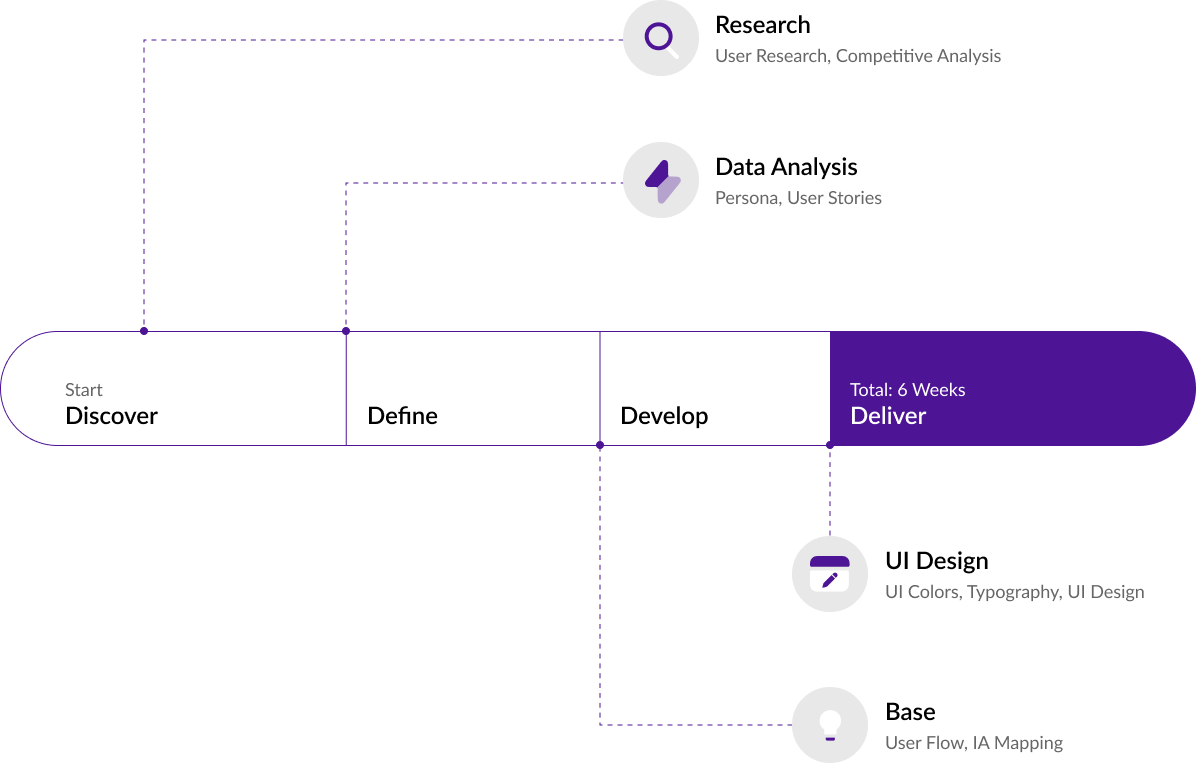
The workflow for our Job Placement Platform begins with discovery, where we align on goals and understand user needs. This is followed by in-depth research to gather insights, and the creation of personas and user stories to define key journeys. User flows and experience mapping are developed to visualize interactions, leading into the UI design phase where ideas take shape visually.
Finally, the designs are delivered with detailed handoff to development, ensuring smooth implementation and alignment with user goals.
User Acquisition & Retention: Everyone already has LinkedIn, Indeed, Naukri, or niche boards in their bookmarks. Convincing users to switch is brutal.
Balancing Both Sides of the Marketplace: Without jobs, candidates leave. Without candidates, employers leave.
Quality vs. Quantity of Jobs: It’s easy to dump scraped or irrelevant listings just to look “full.”
Screening Fake/Spam Employers: Scammers, ghost postings, and shady recruiters are everywhere.
Monetization Without Killing Trust: Charging candidates often feels exploitative; charging employers means you need proof of value.
Data Privacy & Compliance: Handling sensitive user data (resumes, IDs, salary expectations) is a liability.
You need to deep-dive into both sides of your marketplace job seekers and employers because both are your customers, and their needs don’t always align. A job search platform survives on liquidity the speed and quality of matches between seekers and employers. If you design for only one side, you lose that balance and your marketplace stalls.
Your research, onboarding, and product roadmap all need to serve both sides simultaneously, even when their needs don’t naturally align.
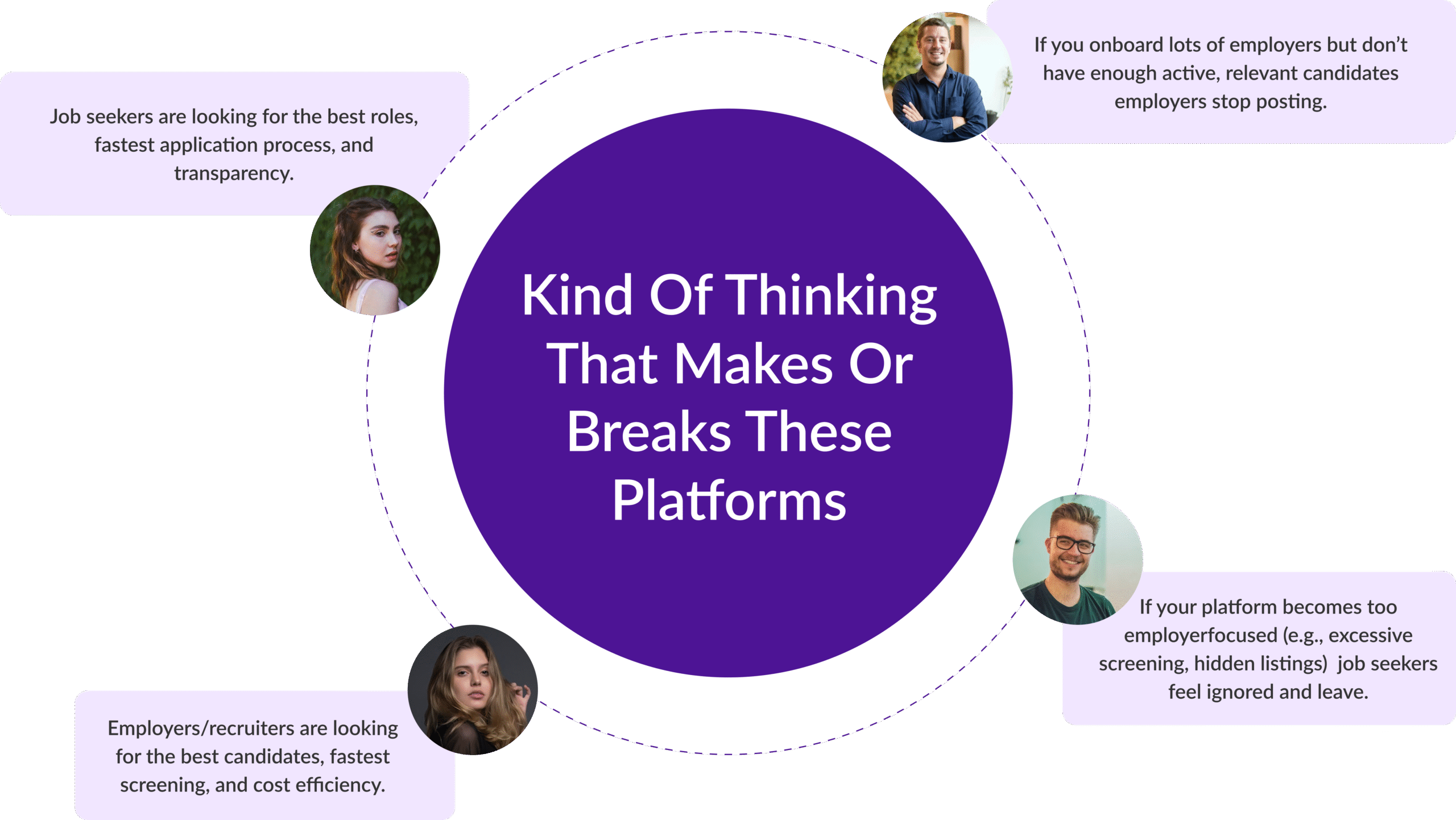
Job seekers are looking for the best roles, fastest application process, and transparency.
If you onboard lots of employers but don’t have enough active, relevant candidates employers stop posting.
Employers/recruiters are looking for the best candidates, fastest screening, and cost efficiency.
If your platform becomes too employerfocused (e.g., excessive screening, hidden listings) job seekers feel ignored and leave.
You need to deep-dive into both sides of your marketplace job seekers and employers because both are your customers, and their needs don’t always align. A job search platform survives on liquidity the speed and quality of matches between seekers and employers. If you design for only one side, you lose that balance and your marketplace stalls.
Your research, onboarding, and product roadmap all need to serve both sides simultaneously, even when their needs don’t naturally align.
“Landing your next role shouldn’t be as draining as working one yet most platforms make it feel that way.”
Priya Sharma
27 years
Location: Bangalore, India
Occupation: Software
Developer Education: B.Tech in Computer Science Career
Stage: Mid-level
Pain points
Pain points
“Searching for a job shouldn’t be a job in itself, but most platforms turn it into one.”
Goals
Pain points
Rohan Mehta
38 years
Location: Mumbai, India
Occupation: HR Manager
Developer Education: M.B.A
Stage: Senior-level
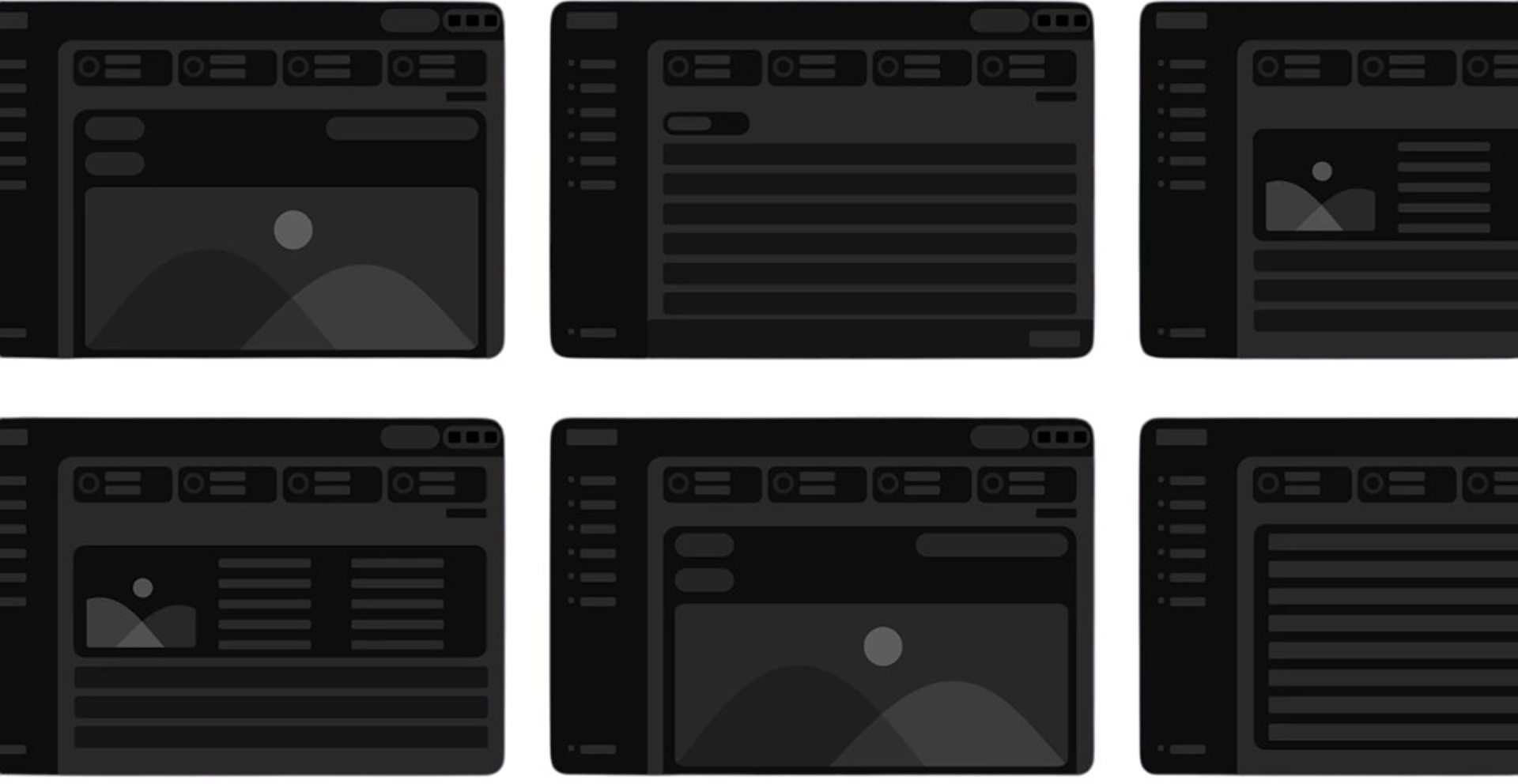
Wireframes are vital in UX design as they provide a visual blueprint for organizing content, defining functionality, and establishing user flow. They clarify ideas, identify issues early, and foster collaboration among teams. By focusing on layout and structure, wireframes help prioritize features, streamline feedback, and save time and costs, ensuring the product aligns with user needs and business goals.
Lato is an excellent choice for Savart’s Portfolio Management Service due to its harmonious blend of modern elegance and high readability. Its semi-rounded details give a warm, approachable feel while maintaining a professional and clean appearance, making it ideal for displaying financial data. Lato’s balanced letterforms ensure clarity across various text sizes, whether users are engaging with in-depth analytics or quick performance summaries.
The font supports multiple languages and delivers consistent rendering across devices, ensuring a smooth, polished experience for all users. Its contemporary yet friendly style aligns perfectly with the application’s goal of being user-focused, professional, and accessible to both novice and seasoned investors.
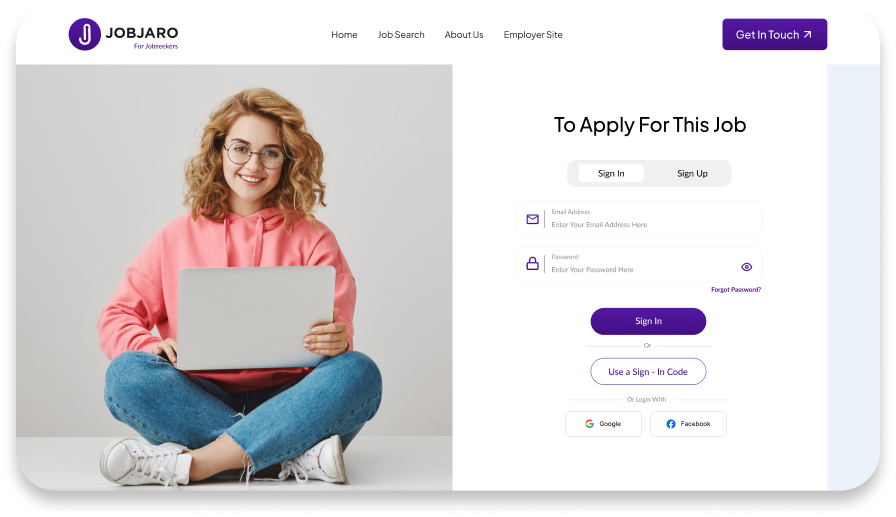
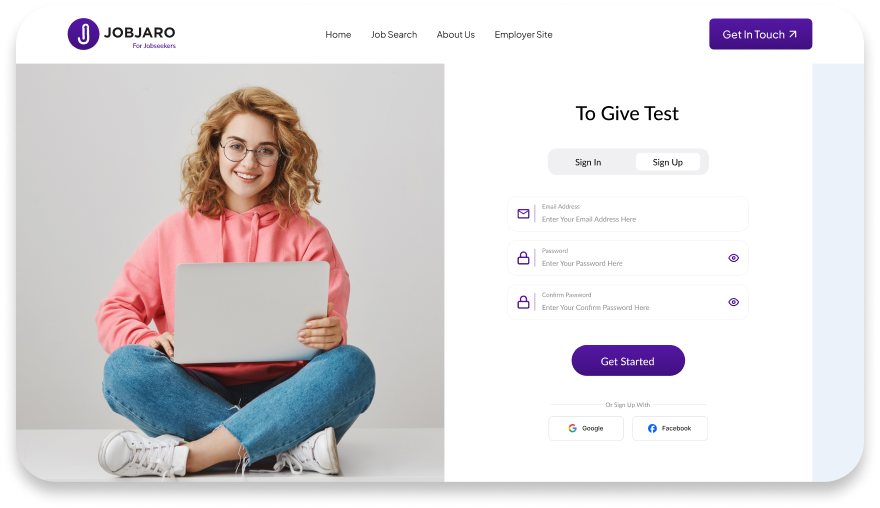
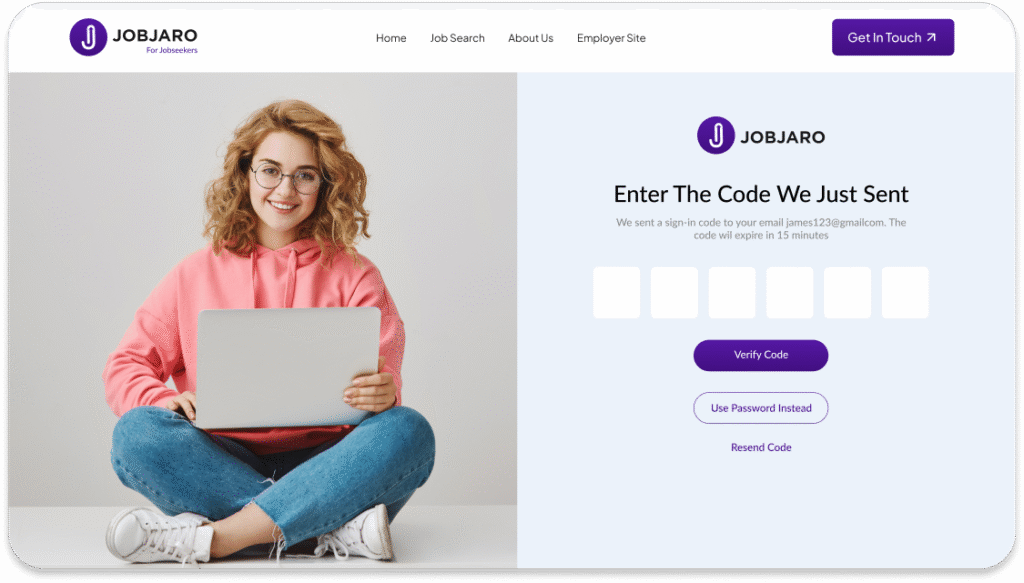
The authentication module provides a secure and seamless entry point for users, offering both Sign In and Sign Up options. Returning users can quickly sign in to access their saved jobs, track application progress, and receive personalized recommendations. New users can register in just a few steps to create a professional profile, enabling them to discover job opportunities tailored to their skills and preferences.
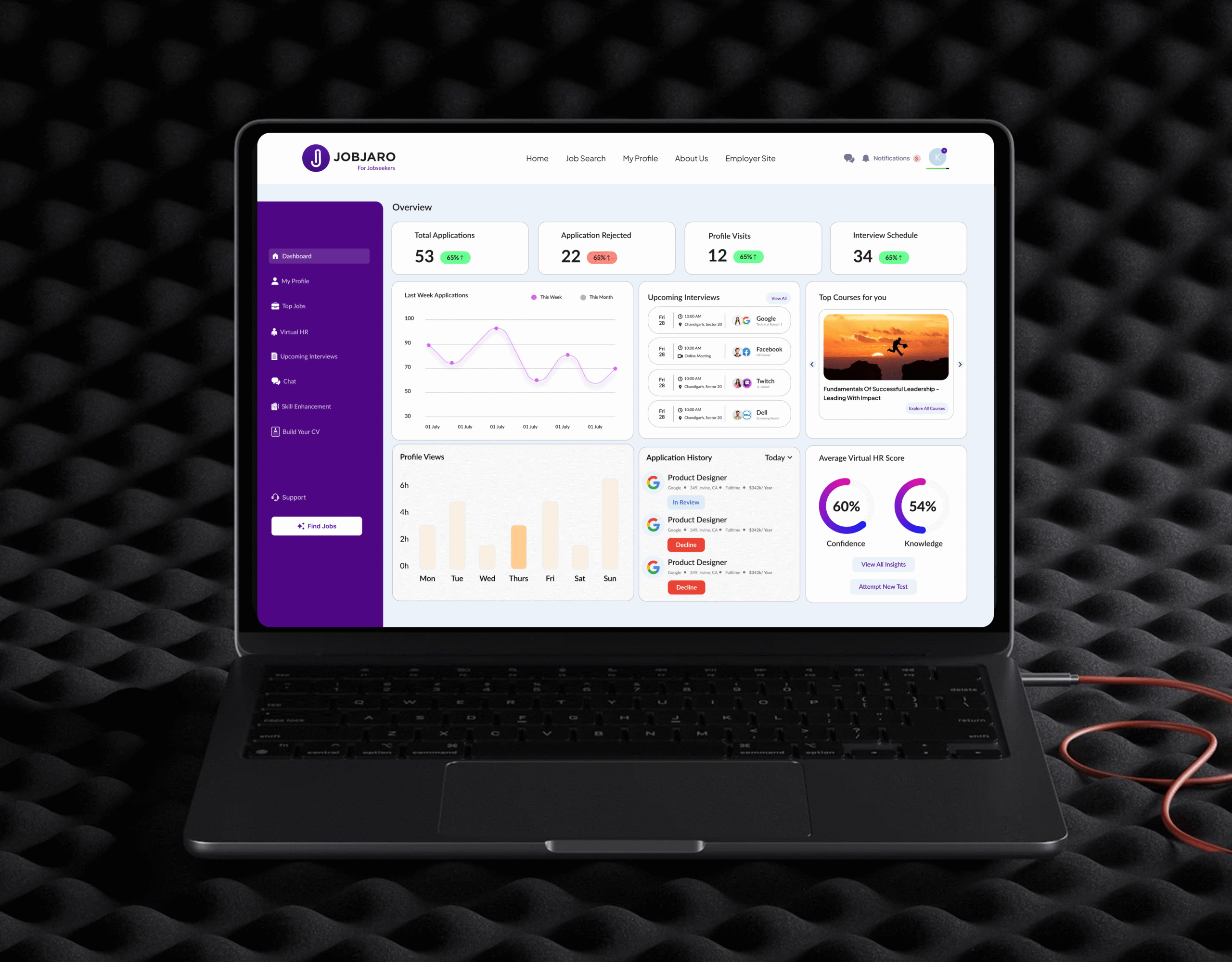
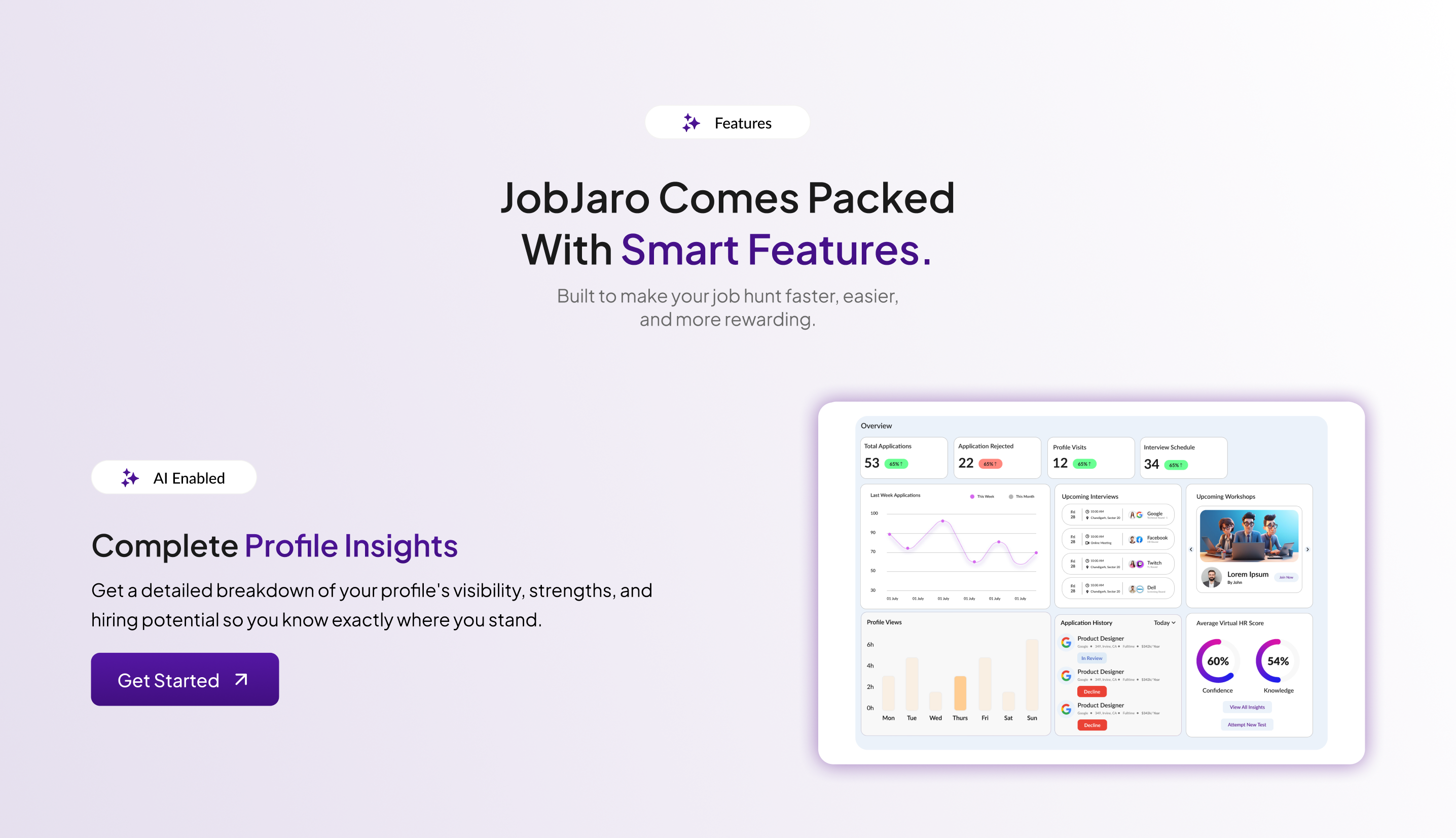
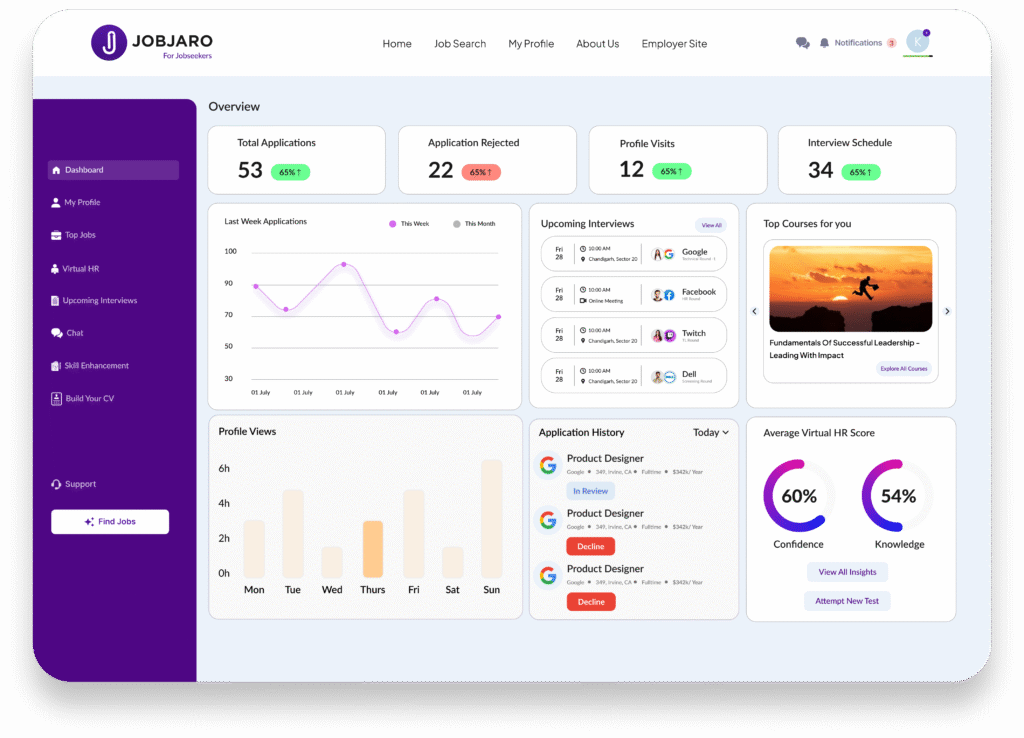
The Dashboard serves as the central hub for users on the job search platform, providing a clear and intuitive overview of essential information and actions. Designed with a clean and organized layout, it allows job seekers to quickly track application status, receive personalized job recommendations, and monitor new opportunities in real time. The dashboard prioritizes usability, ensuring that important updates — such as interview invitations, saved jobs, and employer messages — are easily accessible at a glance.
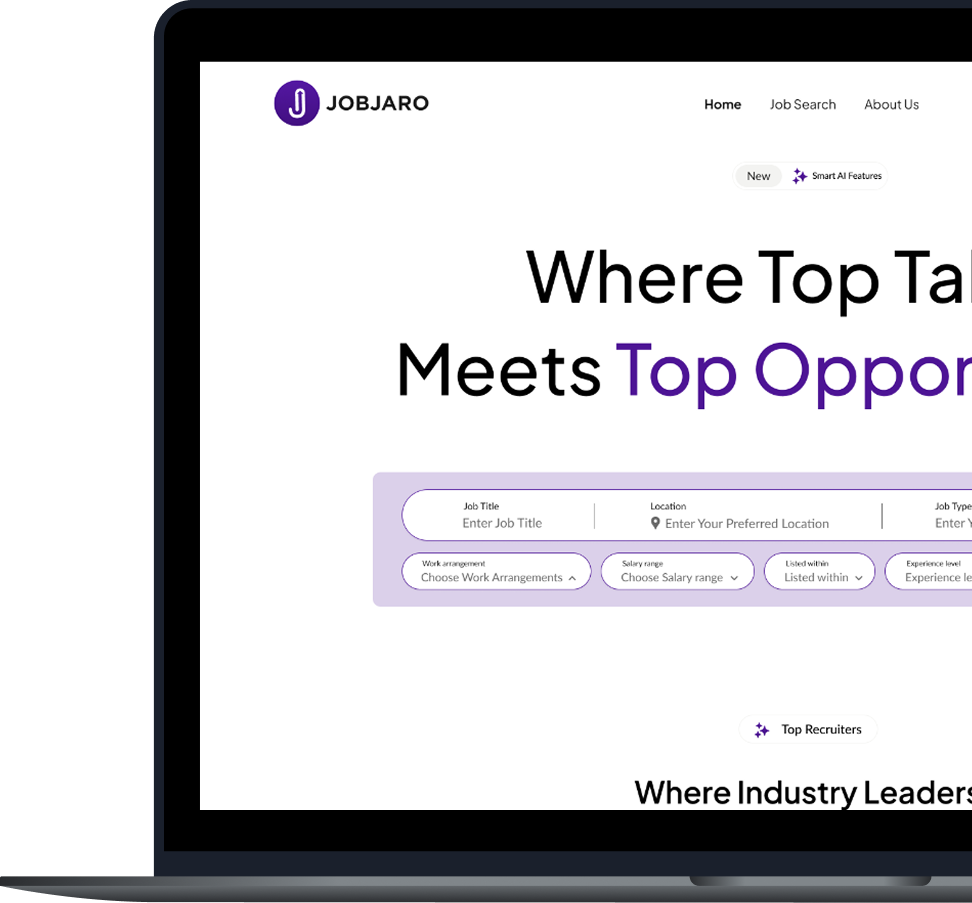
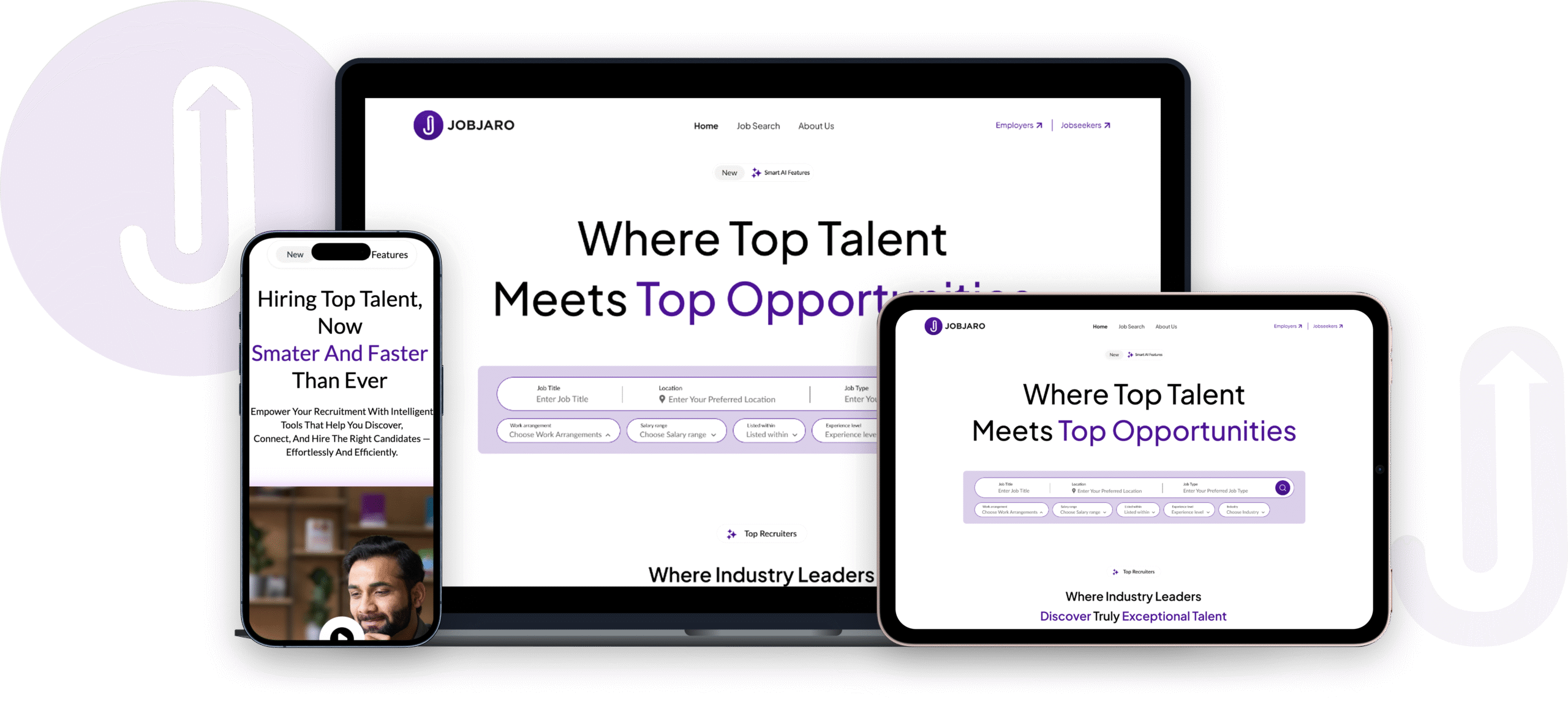
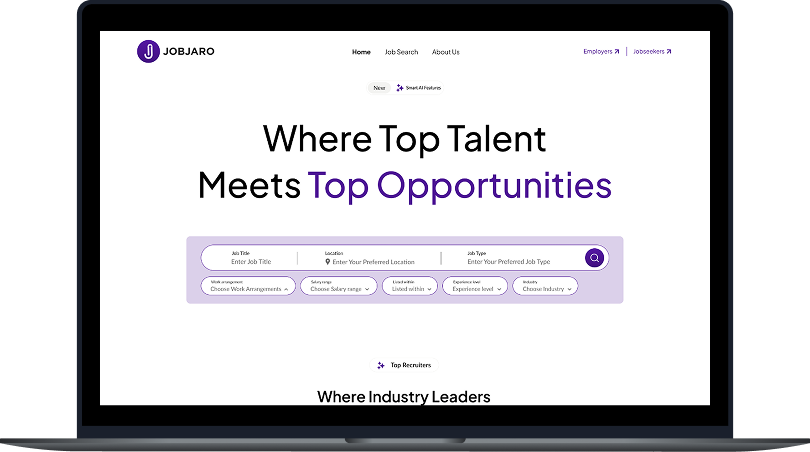
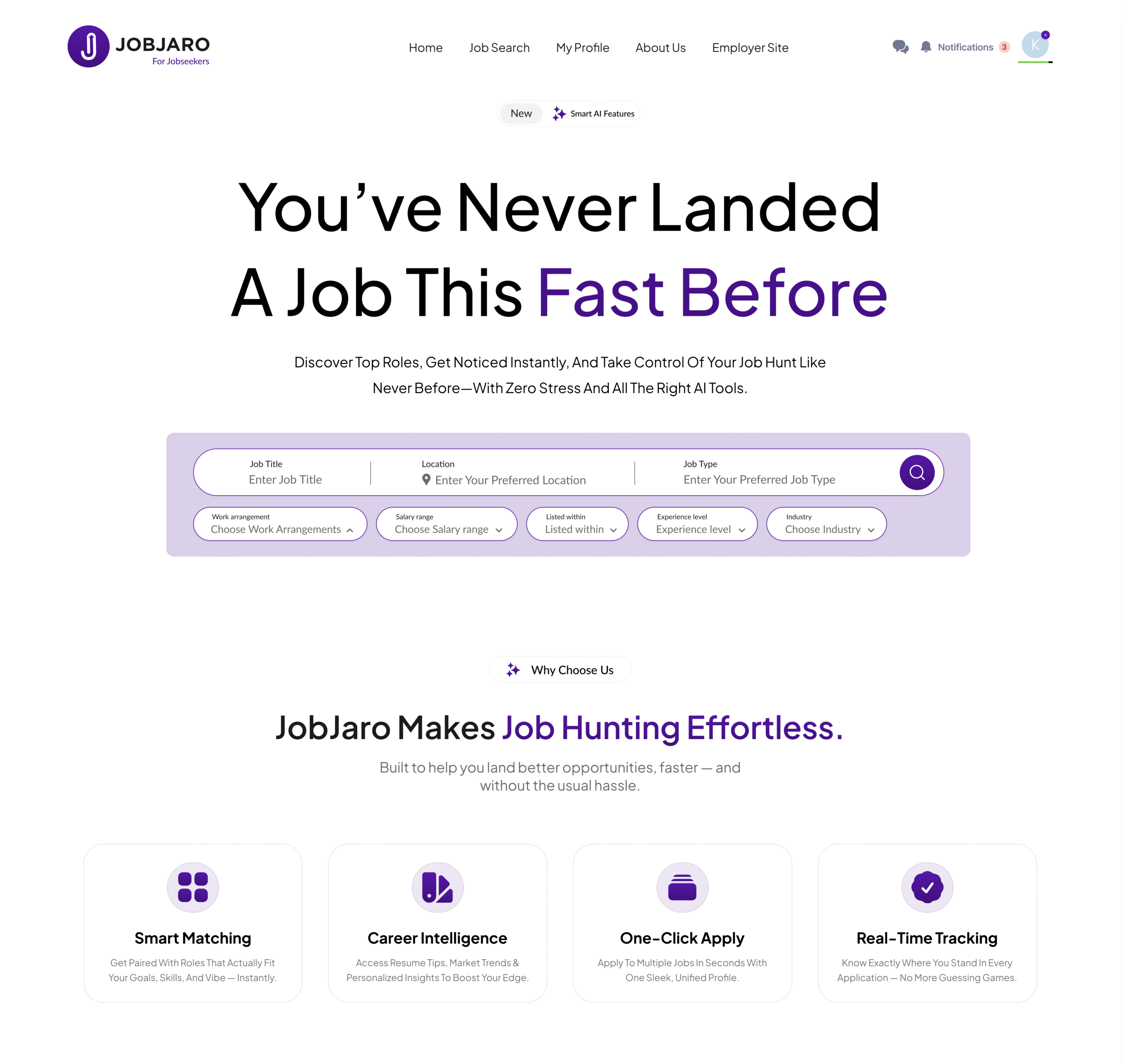
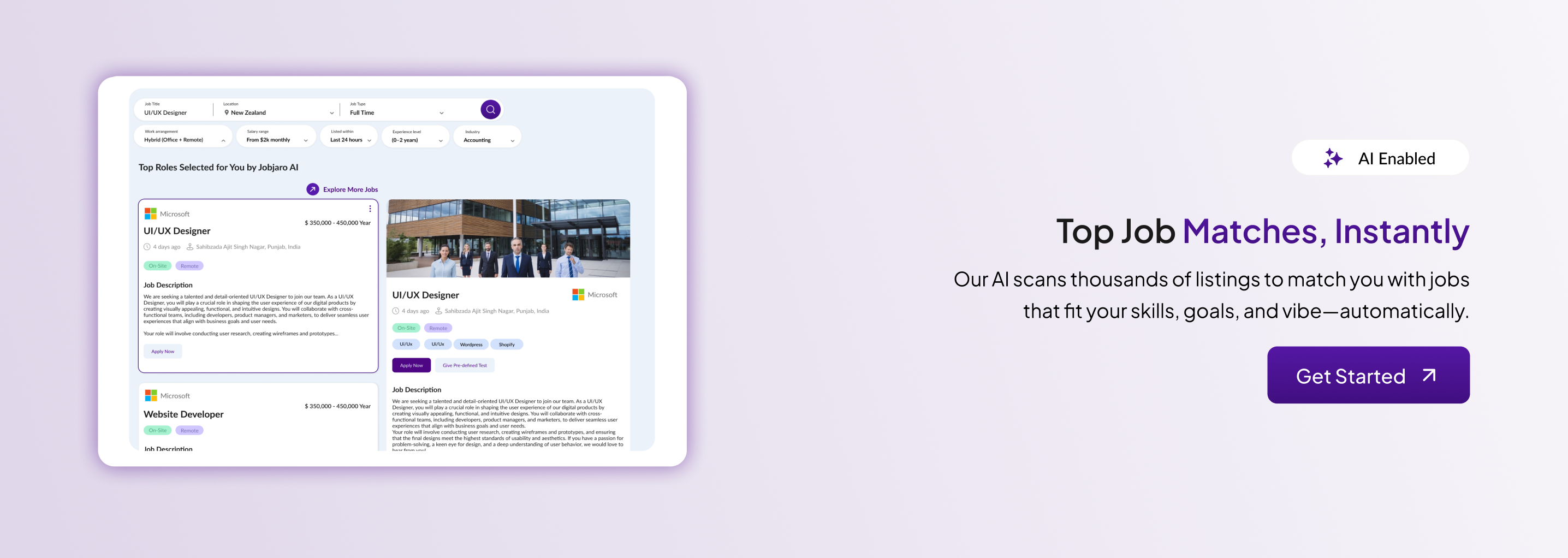
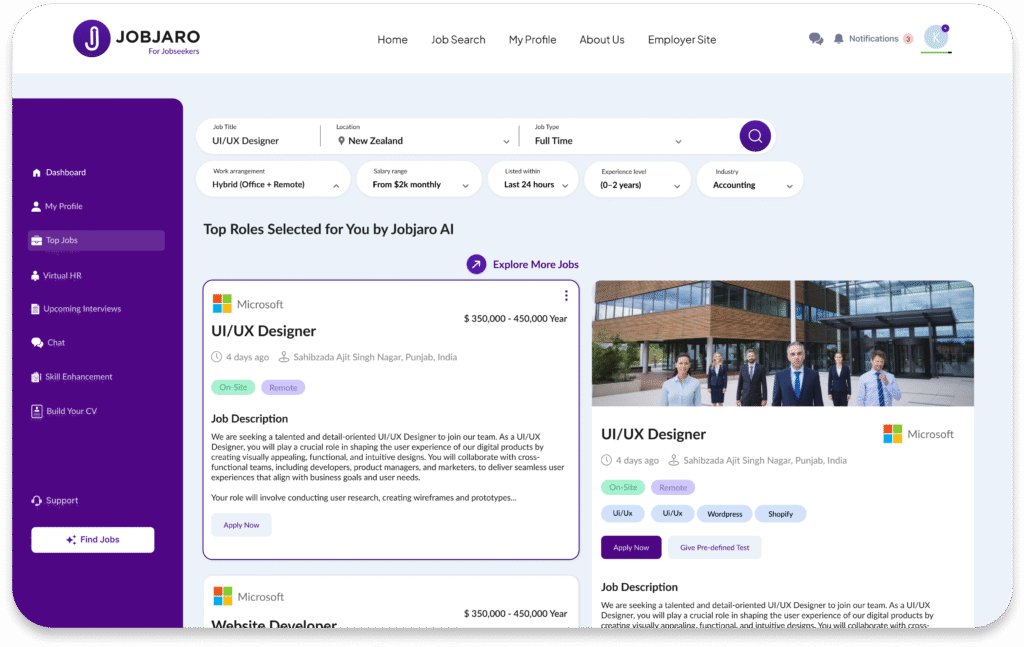
The Top Jobs section showcases a curated list of the most relevant and high-quality opportunities available on the platform. Users can refine their search effortlessly using advanced filters such as job title, location, industry, work arrangement, salary range, and experience level. This feature ensures that candidates can quickly pinpoint roles that match their skills, preferences, and career goals without having to scroll through irrelevant listings.

The Dashboard serves as the central hub for users on the job search platform, providing a clear and intuitive overview of essential information and actions. Designed with a clean and organized layout, it allows job seekers to quickly track application status, receive personalized job recommendations, and monitor new opportunities in real time.
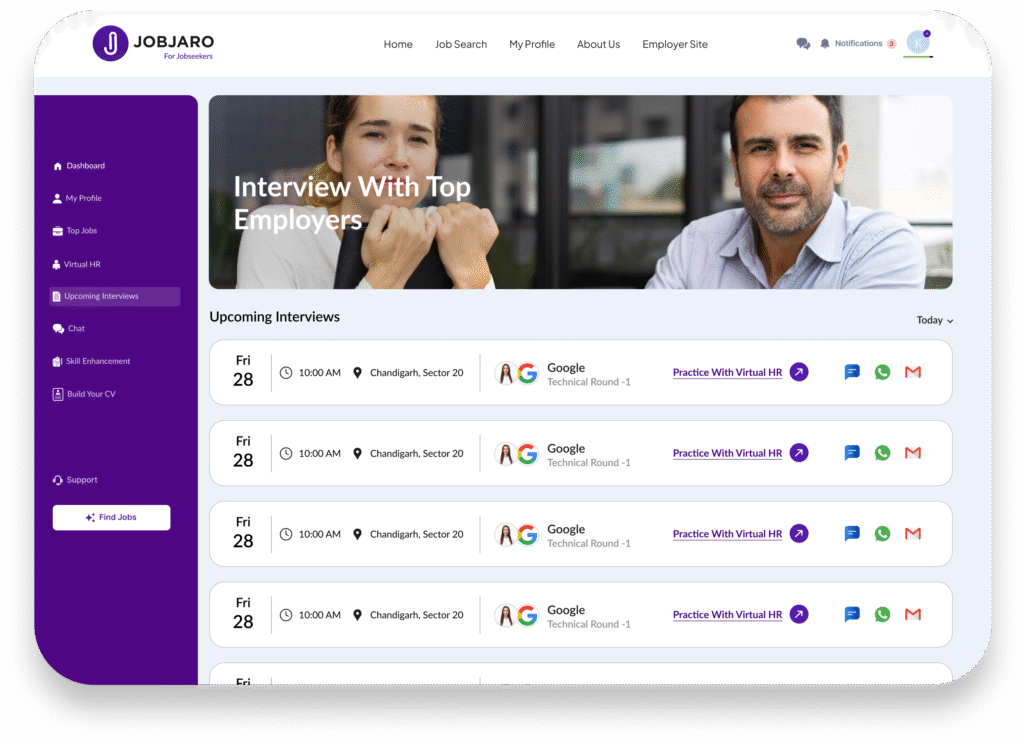
The Upcoming Interviews section provides users with a centralized view of all scheduled interviews, ensuring they never miss an important opportunity. It displays key details such as the date, time, company name, role, interview format (online or in-person), and meeting links or location.
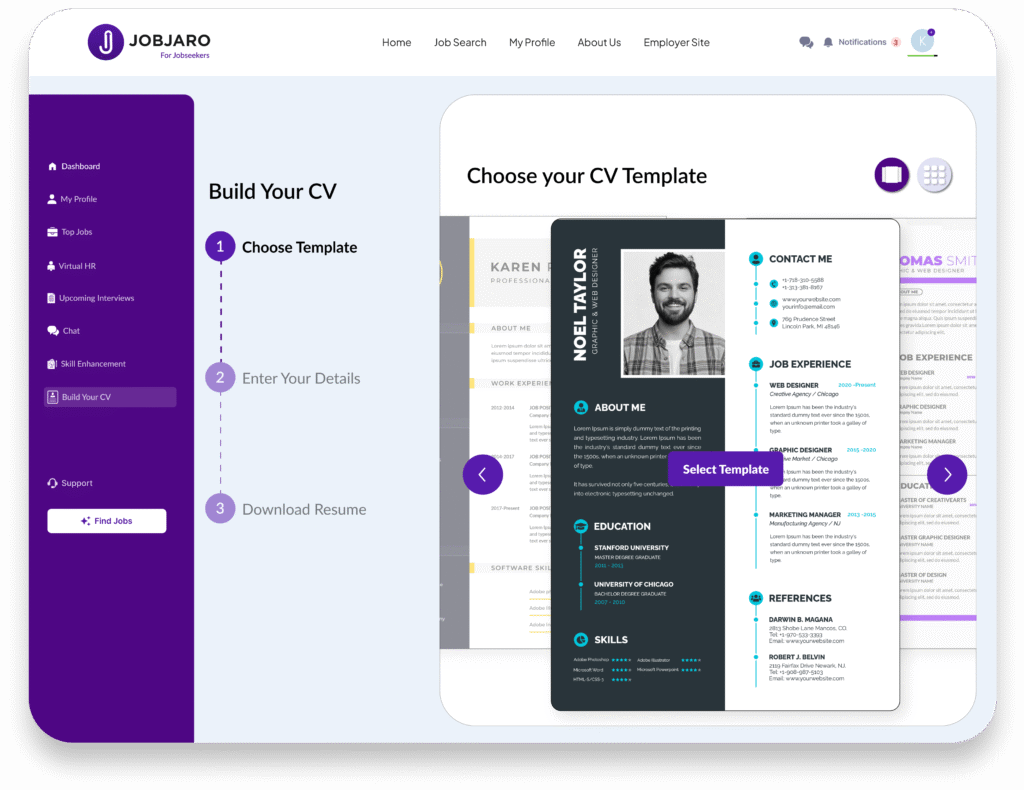
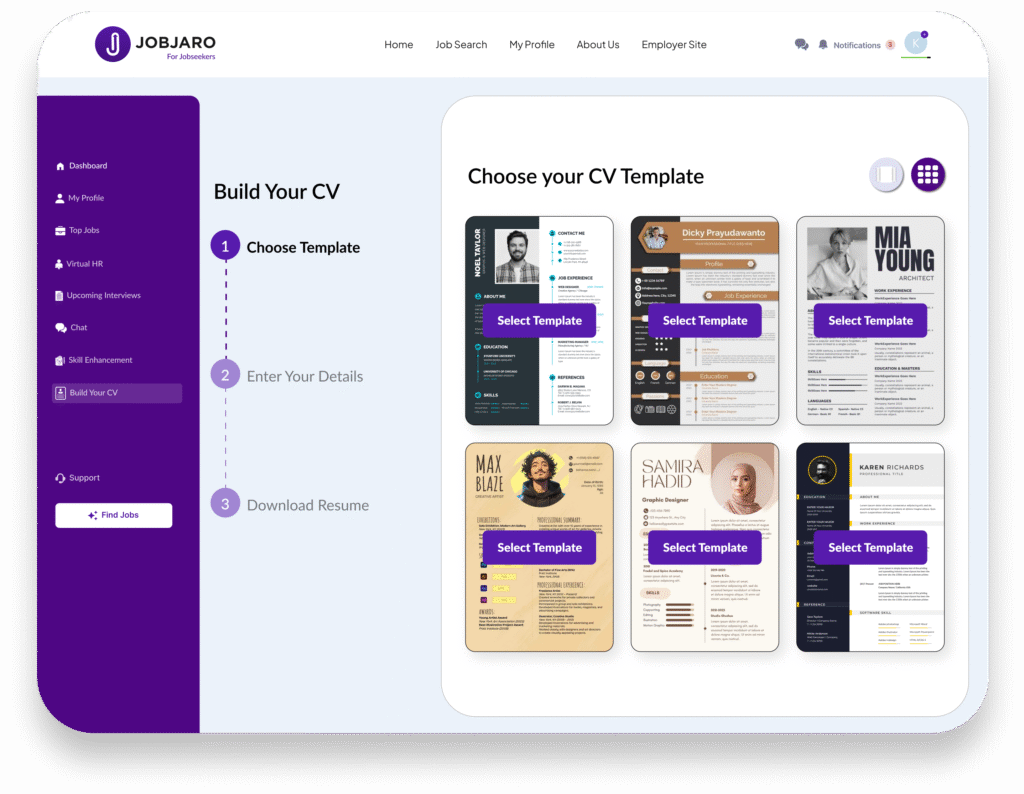
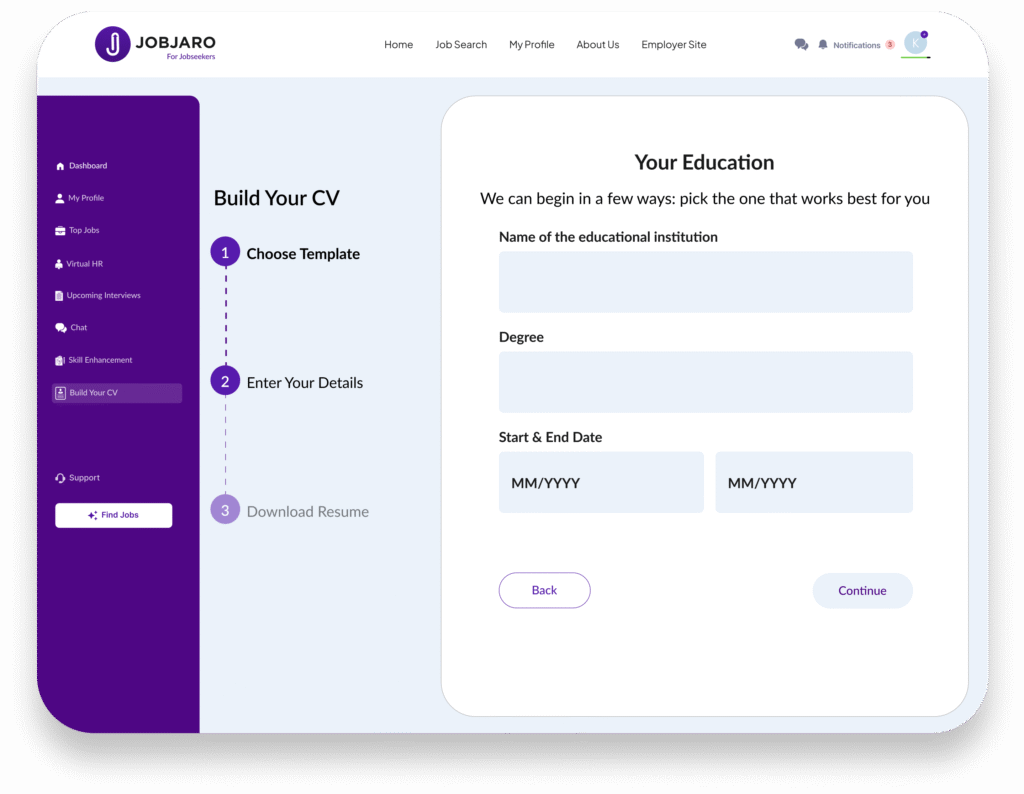
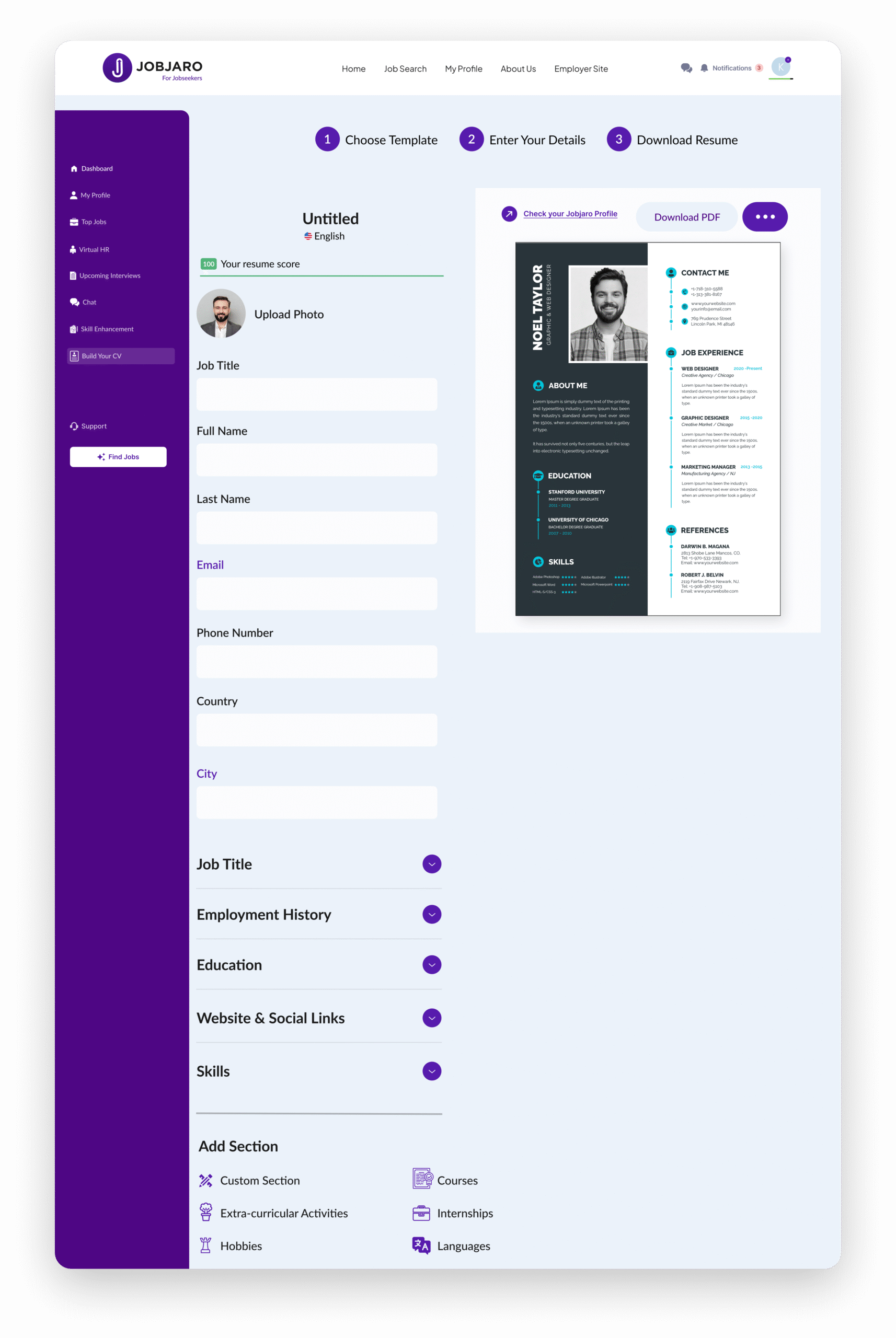
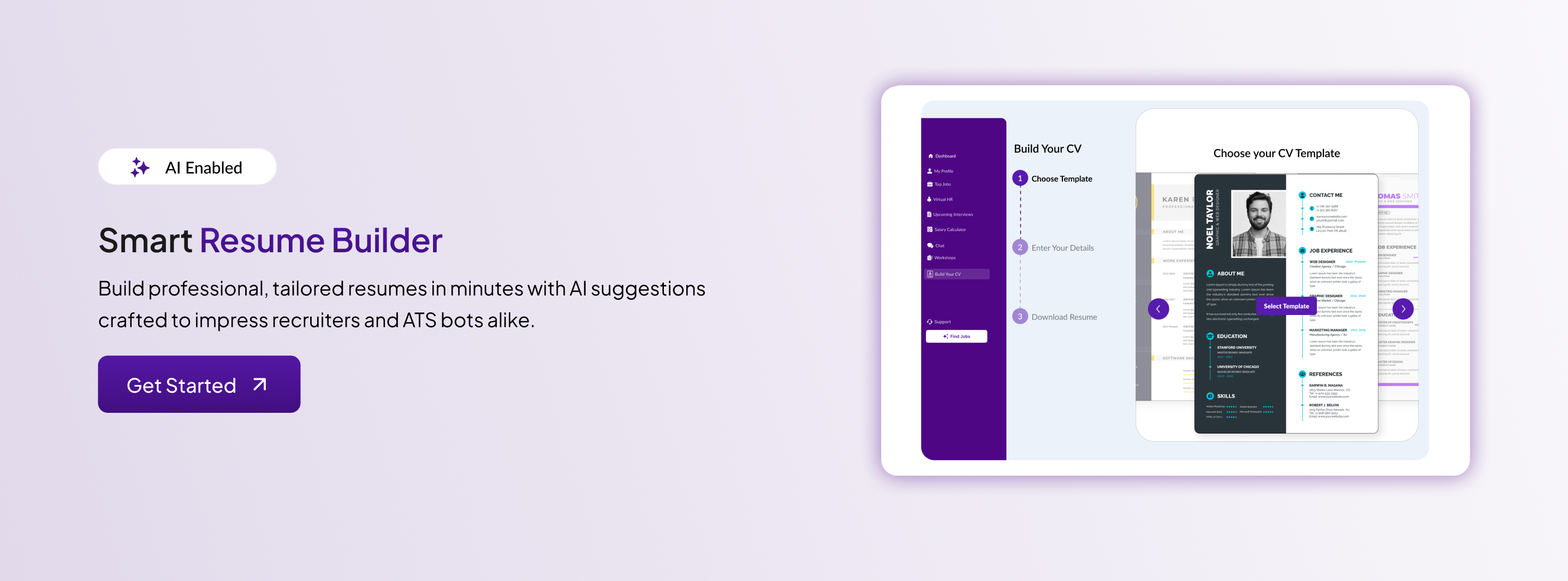
Build Your CV helps job seekers create a professional, recruiter-ready résumé directly within the platform no design skills or external tools required.
Step 1 – Choose a Template
Select from a range of modern, ATS-friendly templates designed to highlight your strengths and improve visibility with recruiters.
Step 2 – Enter your details
Fill in your personal information, education, work experience, skills, and achievements using our guided form.
Step 3 – Review & Download
Preview your CV, make edits if needed, and download it instantly in PDF format or save it to your profile for one-click job applications.
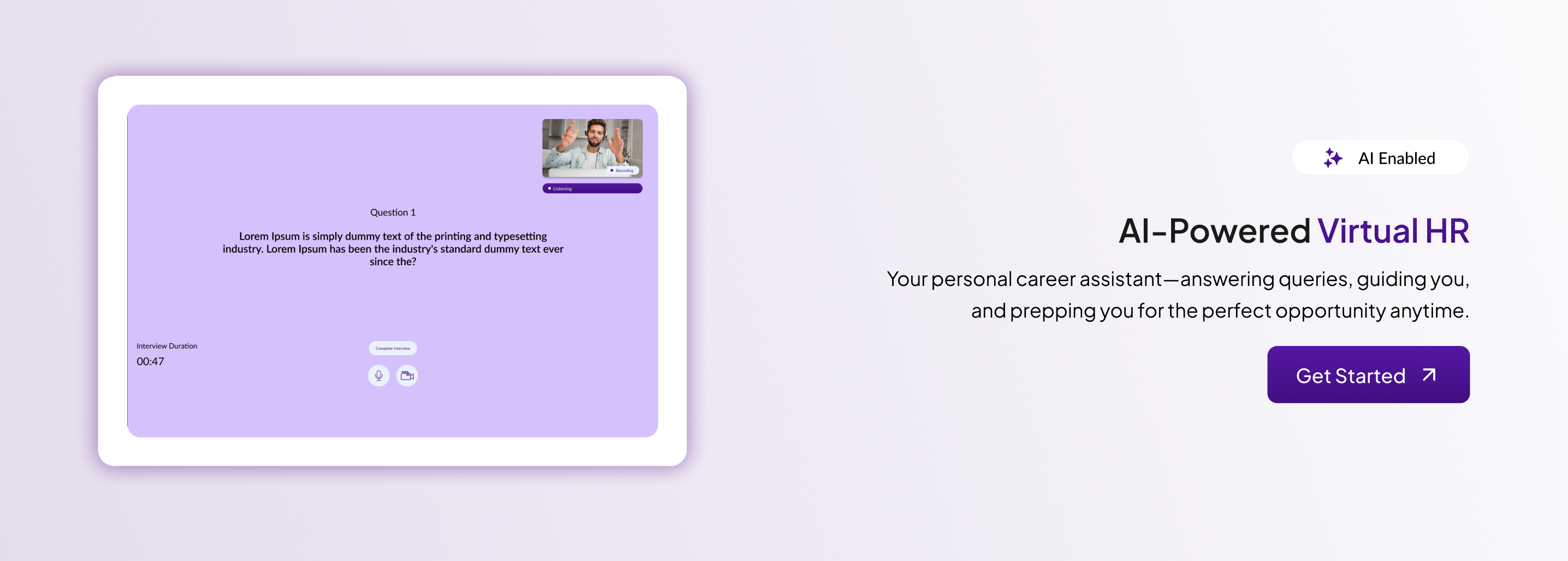
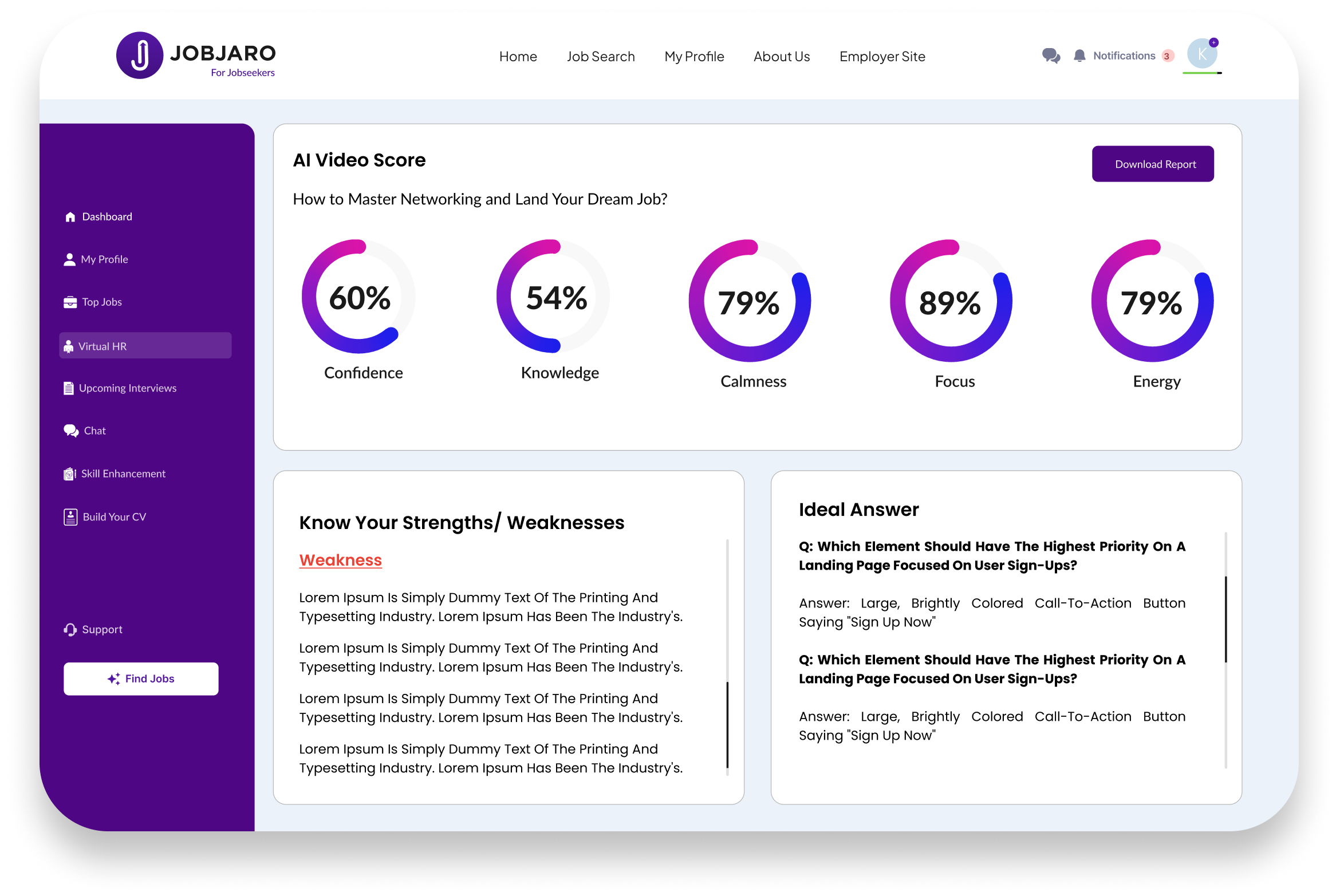
After completing the virtual HR interview, the jobseeker is presented with a detailed application result screen that summarizes their overall performance. The AI-generated result includes key metrics such as the Virtual HR Score, which evaluates confidence, communication clarity, and domain knowledge based on the candidate’s video and voice responses. It also displays a Role Fit Score, indicating how well the user aligns with the job requirements. Alongside the scores, personalized feedback is provided to help candidates understand their strengths and areas for improvement. The screen concludes with actionable suggestions like retaking the test, attending a recommended workshop, or exploring better-matched job opportunities — transforming the result from just an evaluation into a roadmap for growth and better chances of getting hired.